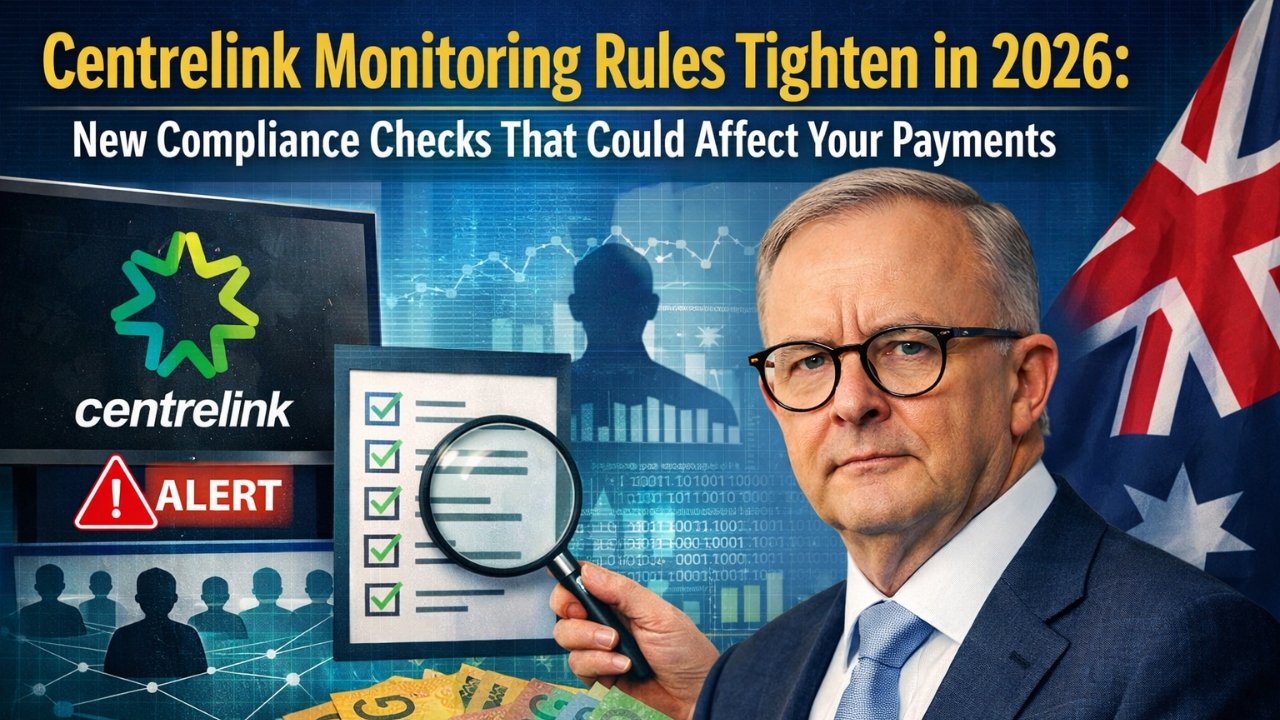
Since many Australians rely on Centrelink payments, the welfare safety net system has been in place for many years helping countless individuals. Services Australia will keep track of payments and fraud through increased monitoring after the year of 2026. JobSeeker, Age Pension, Disability Support Pension, Family Tax Benefit recipients will be affected and laws passed will require more real-time reporting and automated verification systems. This is supposed to help people keep track of who actually needs the funds.
Changes in the Monitoring Rules
A significant change is the automated data matching, whereby Centrelink goes through the personal details of recipients and compares them to receiver data including tax info, bank records, and super balances. Income reporting will also be more frequent than ever as recipients will be required to report updates through the myGov platform and will be checked real-time through automated systems. The activity test on Job Seekers has also become a lot more stringent as claims have to be supported by proof to attend a job training. Long term recipients are now also subject to periodic reviews of their eligibility. New claims have also had to be supplemented by biometric and digital ID verification. This has been meant to reduce human error but also means that recipients have been required to respond to verifiable claims a lot more quickly than in years past.
Effects on recipients
These new rules have meant that recipients must be able to respond quickly or else risk their payments being suspended. This is especially true for single recipients of the Youth Allowance or those Parenting Payment. Temporary contract work, delayed address changes, and unreported income changes can all cause significant downtime (up to weeks) in payments to a recipient. With frequent reviews meant to track and adjust payments to recipients who qualify this has meant that homeowners in the system, or renters have been made subject to scrutiny. Many people are less than willing to embrace the system. And for people living far away in the bush, less technologically savvy people, and the elderly, Community Service Hubs are the suggested places to go for help. It has been a challenge for people to embrace it system despite the system being meant to track and save payments made by the taxpayers.
Compliance Obligations for the Future
Prompt document uploads and detail confirmation on random audits are new obligations. Below are compliance obligations that are currently under review.
| Requirement | Description | Frequency |
|---|---|---|
| Income Reporting | Declare earnings accurately via app or portal | Fortnightly |
| Data Matching | Auto-checks against ATO/banks | Ongoing |
| Identity Verification | Digital/biometric scans | Initial & periodic |
| Activity Proof | Job search logs or medical exemptions | As required |
| Document Uploads | Payslips, tenancy agreements | On notice |
Remote reporting has to then become the new normal. Your myGov account has to be linked, and remote reporting compliance has to be documented.
What are the Pros?
Tightening of compliance obligations has to come my changing guidelines. The march 2026 indexation saw a payment rise of about 1.9% alongside a rise in income/asset threshold. Thorough oversight alongside genuine support.
FAQs
Q1: Recipent adaptability will be rewarded in 2026.


There will be resource blocks that will need to be navigated in order to be eligible for the entitlement.
Q2: What do compliance audits regarding eligibility need to be based on in order to not be predicated on remote reporting and data audits?
A failure to meet compliance?
Q3: Can payments issues be resolved quickly?
Yes, if issues are documented, payments are reinstated in days.