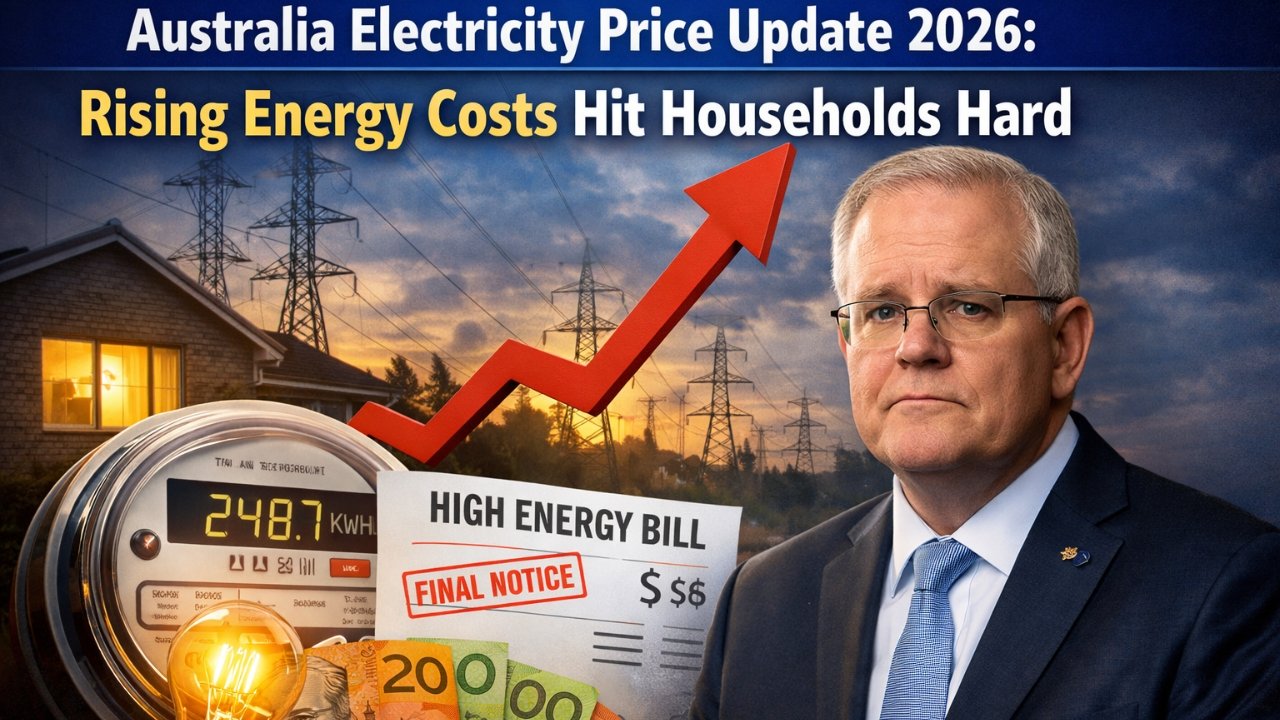
With everyday expenses leaving Australian families budget-stretched, electricity prices keep rising and are set to rise even more through 2026. With federal energy relief programs being at an end, as little as three months from now, families are expected to experience as high as 24% increases on their electricity bills from last year. This is due to global energy trends, the delayed completion of expensive infrastructure, and the slow shift to renewable energy. It is leaving everyday Australians asking, “How much more can we bear?”
Pricing Trends Explained
The end of automatic bill rebates has exposed families to the full brunt of market rates, with economists projecting an extra $500 annually for a typical three-person household. Families are facing more expenses then ever due to inflation and the rapid rate of energy cost increases through goods and services. In 2025, due to the increase of renewables, the wholesale prices of electricity in Queensland and New South Wales fell by 15% and 13% respectively. The cost of retail electricity bills, however, has continued to increase as providers continue to alleviate the costs of network upgrades and supply chains onto consumers.
With increased energy prices, families are now more than ever arguing over costs associated with leaving lights on and devices in standby mode. South Australia illustrates the promise of renewables with negative priced power, meaning electricity sold for less than zero for almost 30% of the year last year, but because of the costs of electricity distribution, retail energy prices remain high.
Breakdown of Prices by State
| State | Provider | Rate (cents/kWh) |
|---|---|---|
| NSW | AGL | 31.6 – 36.5 |
| NSW | Origin Energy | 33.3 – 37.8 |
| VIC | Origin Energy | 27.5 – 32.5 |
| VIC | EnergyAustralia | 28.2 – 33.4 |
| SA | Alinta Energy | 28.4 – 33.0 |
Reasons for rise in prices
In the last 10 years, electricity prices in Australia have risen by 117 percent, as the inflation adjusted figure stands at 76 percent. Electricity prices have risen at a rate faster than the rise in the median wage. In the past, renewables caused a reduction in costs at the wholesale market, and on average, it was calculated that a household without renewables would lose around 417 dollars. However, with the aging gas grids, delivery costs have risen. The damages caused by the aging gas grids are aggravated by the reliance on gas. In the past, the goals of the government required the installation of faster and smarter grids and the closure of old gas grids. The delays caused by the gas grids will cause pain in the short-term, but the damages also provide lasting benefits. Ultimately, the system will also provide several benefits in the long-term.
The first point taken by businesses following a rise in input costs is to pass the costs to the customers. The rise in input costs to a business will cause the business to increase the prices of its products to the end consumer, and this will rise in cost will push inflation to 4.4 percent by the end of the year. In New South Wales, the prices of wholesale electricity, on average, reached 109 dollars per megawatt-hour last year. The average wholesale electricity prices were previously recorded at 125 dollars per megawatt-hour; hence, there is a huge divergence that is reflected in the retail prices.
Household assistances
Use the Energy Made Easy Website to switch service providers and get competitive service at a 10 to 20 percent price reduction. By using LED bulbs, you will incur no costs, and you will also be able to achieve the reduction of electricity usage. The installation of solar panels with batteries is a very profitable business. In a period of 5 to 7 years, solar panels will pay for themselves. In addition, there are various incentives provided by the governments.
Smart meters assist users in tracking electricity consumption, therefore helping users avoid spending money during peak hours. The suburbs are also seeing more community bulk-buy initiatives for solar panels as buying panels in bulk lowers the cost for individuals. These initiatives save people money, as well as protect consumers from the possibility of rising prices in the future.
Positive Predictions

Analysts expect prices to stabilise by 2027 if renewables are deployed more quickly, and SA negative pricing model is adopted in the rest of Australia. With the government advocating for more control over pricing, and limits to transmission, a 5-10% increase per year is expected.

Those who adjust to more efficient methods, especially solar, will fair better during. the coming years.
Analysts have great hope for Australia’s new energy paradigm, however, without modifications, the forthcoming years will be difficult.
FAQs
Q1: Will prices keep rising in 2027?
If renewables are adopted, a modest rise is expected. However, if the grid isn’t updated, this will worsen
Q2: How much has electricity risen over 10 years?
Inflation adjusted, the increase is 76 percent
Q3: Can solar really help?
YES, the average savings solar offers is $400 upwards and the payback period is also quite short.