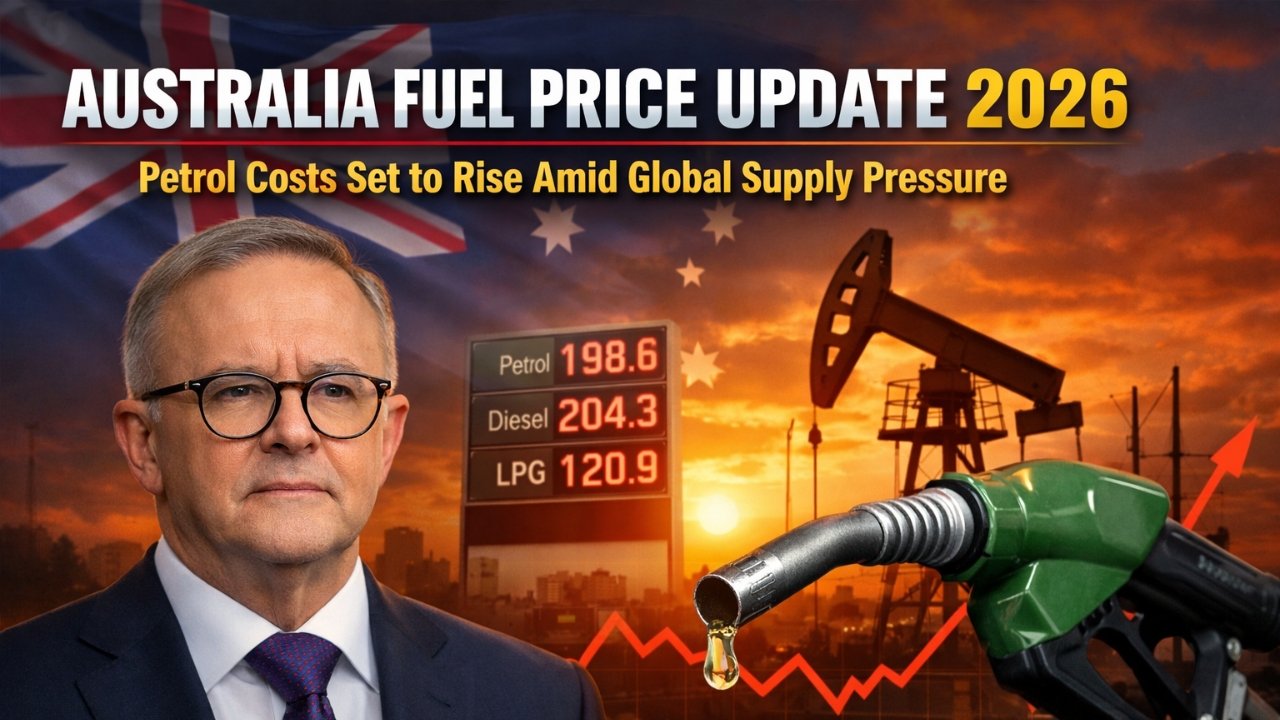
As global supply issues increase the price of petrol, Australian motorists are bracing for a new round of price hikes for fuel in 2026, despite the fact that Australian consumers are already experiencing the effects of inflation and increased costs of living. The most recent information indicates that the average pump price for petrol has increased in the past few weeks. Industry analysts predict that prices will remain high for as long as geopolitical conflicts remain and the global crude oil market remains unstable.
Increased Cost of Fuel in 2026
In early 2026, the average price for petrol in Australia reached almost $2 per litre. Prices for petrol even in ultra-competitive tier 1 markets has fallen sharply and is expected to fall below $1.50 per litre. The main cause of these price increases is the ongoing military skirmishes and shipping delays in the Strait of Hormuz which leads to an increase in oil prices as cited by the Brent and West Texas Intermediate crude oil benchmarks.
In Australia, Australia’s fuel market remains sensitive to global benchmarks since the country depends on imports of refined fuels. Fuel is fine, but the risk and volatility perception have led to the retailers and wholesalers to insert bigger margins, which is increasing the price at the bowser. Government and industry sources have shown that the price increase due to perceived risk and volatility are added to the price of crude, refining, freight, taxes, and other normal components of the final price.
Current Price Levels and Regional Differences
The average price of petrol per litre is $2.05 up to $2.10 but this depends on the city and state. Regional centers are paralleled to have prices increase during local supply disruptions or extreme weather. Generally, the cheapest and most expensive state prices are 10 to 15 cents. This is due to the local fuel excise policy, station competition, and wholesale margins. This variability helps to assess the price at the pump.
| State / Territory | Typical unleaded price (cents/L, April 2026) | Notes |
|---|---|---|
| New South Wales | 212–217 | Higher in Sydney metro; discounts often limited to morning hours |
| Victoria | 208–213 | Competitive stations around Melbourne suburbs |
| Queensland | 210–215 | Slight premium in Brisbane; regional areas can be higher |
| Western Australia | 205–210 | Generally lower than east‑coast capitals |
| South Australia | 211–216 | Sensitive to interstate fuel movements |
| Tasmania | 215–220 | Higher due to transport and logistics costs |
| Northern Territory | 213–218 | Prices can rise quickly if freight routes are disrupted |
| ACT | 210–214 | Slightly below Sydney due to different tax arrangements |
This kind of dispersion is normal in Australia’s fuel market, but it also means that where you live and shop can have a material impact on how much you pay each week.
How the Government Is Responding
Fuel bills are a public concern, leading the federal government to take measures to ease the burden on consumers. In 2026, the government temporarily reduced the excise tax on petrol and diesel, providing some relief at the bowser. This move temporarily offsets the impact of the global crude price increase above 110 dollars a barrel. The tax can increase again if the crisis is resolved.
State governments are stepping in with targeted assistance. Some have broadened fuel-discount initiatives for low-income households, farmers, and operators in regional transport, while some are tightening the pricing behaviour scrutiny of fuel stations. The Australian Competition and Consumer Commission noted that it is looking for ‘opportunistic’ price increases where retailers increase prices quicker than the wholesale price changes. It is encouraged that consumers report these behaviours and the regulator will respond more aggressively to evidence of unfair pricing.
What does this mean for households and businesses?
The higher fuel prices affect the entire economy including grocery shopping and delivery. The business transport costs are significant for agricultural businesses, haulage firms, and courier services, and many of these costs are now being transferred to consumers. Retailers indicate that a sustained increase of 30-40 cents per litre will increase some fresh and refrigerated goods prices by 2-5 percent because they are reliant on road transport.
The impact on household budgets is clearer at the level of individual households. A family that travels 500–700 kilometres each week in a vehicle may incur an additional $8–12 in fuel expenses with each 10-cent increase in fuel prices. Such increased expenses will eventually force many drivers to rethink their travel plans to try to travel as little as possible, combine travel trips, or to put in place plans to carpool with their colleagues and neighbours. In addition to this, the increased costs will result in more drivers utilizing fuel price tracking applications and fuel station loyalty programs that, when used on a regular basis, will result in 5 to 15 cent reductions per litre on the price of fuel each time they fill up their vehicle.
What Drivers Can Do Now
Practical steps can be taken to help limit the effects of increased fuel costs, even though oil price fluctuations result from global economics that individual drivers cannot control. For example, drivers in your local area can plan trips in such a way that allows them to travel on days when fuel prices are the lowest, typically the middle of the week and at the start of the day, to achieve fuel price savings. In addition to this, as part of regular vehicle maintenance that can include vehicle maintenance that is focused on improving combinations of fuel and mechanical engine combustion system replacements, any maintenance that is focused on the vehicle’s tires and their inflation and stopping regimes can help them achieve on a single vehicle trip (calculated as one trip times the number of kilometres per trip) costs.
In addition, considering the use of public transportation, cycling, or car sharing in your location, especially in city areas with good public transportation systems, may also be a good alternative. A fuel price increase in 2026 will ultimately encourage more people to integrate hybrid and electric vehicles into their lives, despite the high initial costs. In conclusion, this spike in fuel prices should help drivers realize that their information and flexibility regarding their vehicle refueling habits will have a positive impact on their household budget fuel costs.
FAQs
Q1: Why will petrol prices continue to increase in 2026?
Petrol prices in Australia have been increasing due to worsening geopolitics in the Middle East region around the Strait of Hormuz, leading to tighter supply of oil which increases the price of crude oil. Additionally, the rising prices are due to Australia’s importation of refined fuel and retailers have been slow to price down fuel.
Q2: Will fuel prices go down later in 2026?
Analysts forecast a decrease in pricing later in 2026, but only when crude oil markets and tensions increase to a level of stability. Recovery on pricing will decrease gradually, meaning pricing will remain at a higher level of pricing in the years 2024-2025.
Q3: What can be done to decrease the cost of fuel?
Most savings on fuel price comes with the refuels done on the cheapest price in your location, fuel- loyalty programs, and maintenance of your vehicle to ensure fuel effective travel, and minimised travel to essential travel only.