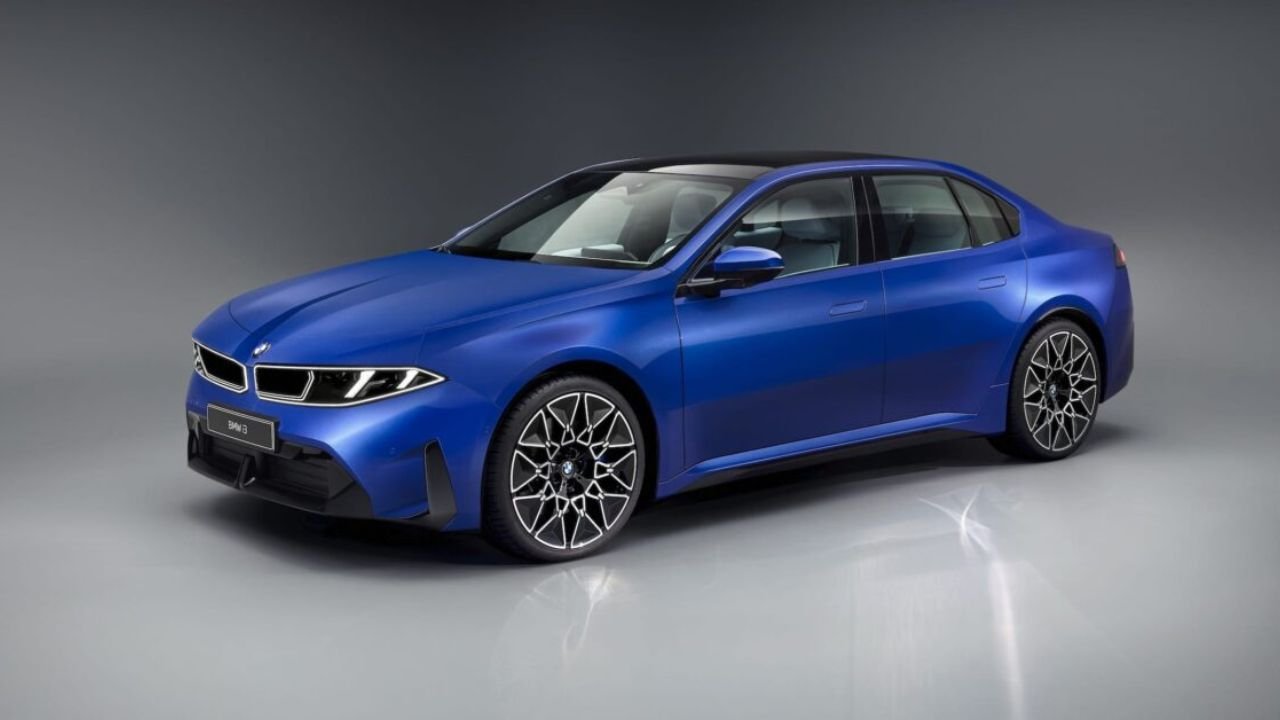
2026 is an important year for the automotive industry as it marks the debut of the new BMW i3. Many people will remember the carbon–fiber BMW i3 hatchback from over a decade ago, but the new version is completely different. The new BMW i3 is the first sedan built on the new, state of the art, BMW ‘Neue Klasse’ platform which is completely focused on electric mobility. This new platform will allow BMW to fully transform their design philosophy from an era where they simply replaced gas powered engines with electric. The BMW i3 50 xDrive is the first car that truly redefines what a luxury sport sedan is as the world transitions away from combustion engines. The exterior styling of the new platform marks a departure from the BMW design language of large grilles that have dominated the past decade. The new BMW i3 has a more sleek and subtle ‘shark-nose’ front that is futuristic and retro at the same time. The styling truly embodies the changing times for BMW.
Performance and Neue Klasse Engineering
The 2026 i3 features the sixth generation of eDrive systems by BMW. i3s are the first to use 800 volt systems to improve both performance and efficiency. The i3 50 xDrive version has two motors which produce a whopping 469 hp and 645 Nm of torque. One the road, the i3 50 xDrive version can go from 0 to 100 in under 4 seconds, which is astonishing due to the performance delivery of the old M3. The true performance secret of the i3 50 xDrive is the Heart of Joy, a new performance computer that is integrated into the car and handles powertrain and handling tasks 10 times faster, than the previous computer. This makes the car and driver feel like the are more unified with the road and gives the car a better performance feeling than it center mass supports.
Range, Battery Technology, and Charging Speed
“Range anxiety” is a common problem when it comes to the adoption of electric vehicles. However, it has been improved in the 2026 i3 due to the massive increase in energy density. The new cylindrical battery cells give the i3 a new, flatter floor, and a total range of 900 kilometers, or about 560 miles, on the WLTP cycle. Even on real world, highway driving, drivers can comfortably expect to achieve over 700 kilometers of range. When you finally need to charge, you can expect to add 400 kilometers of range in only 10 minutes with the 400 kW DC fast-charging. Out of all of the competitors operating on 400-volt systems, the i3 is the most advanced. The following is a summary of key specifications for the 2026 i3 models.
| Feature | i3 40 (Entry Level) | i3 50 xDrive (Launch) |
| Drivetrain | Rear-Wheel Drive (RWD) | All-Wheel Drive (AWD) |
| Horsepower | Approx. 300 hp | 469 hp |
| 0-100 km/h | 5.8 Seconds | 3.9 Seconds |
| Max Range (WLTP) | 700 km | 900 km |
| Charging Speed | 250 kW DC | 400 kW DC |
| Starting Price | Est. £48,000 / $60,000 | Est. £55,000 / $72,000 |
Interior Innovation: Panoramic Vision
The 2026 BMW i3 is more high end than the previous models. The new interior looks more like a modern lounge than a cockpit.BMW has replaced the conventional dashboard with something called “BMW Panoramic Vision.” This new tech displays important information like speed and navigation at the bottom of the windshield so the driver can view it without taking their eyes too far off the road. Along with a 17.9 inch central touchscreen and a conversational AI system, the driver has several modern options. Instead of the traditional leather, BMW has opted for a more sustainable material which gives a more modern and refreshing vibe. Modern computing power means that the system can be highly personalized to the user’s mood and driving conditions without any lag.
2026 BMW i3 results in an important question, is it worth buying? Your answer is a question of how far your specification for a luxury vehicle goes. In terms of cutting edge ease, the answer would be an unequivocal yes. BMW has integrated a means of maintaining its ‘Ultimate Driving Machine’ essence with a focus on a fully digitized means of driving. This vehicle possesses the required rate of refinement and charging capability needed to consider it as a primary vehicle for long distance travel and not only a city driving vehicle. Given the position of the vehicle in the premium market, the reduced maintenance costs and the marked increase in the lifespan of the vehicle’s battery justified extending for 5 to 10 years. This means a high valued battery. This presents as a cohesive and thoroughly engineered electric vehicle which has finally met the criteria of a worthy electric vehicle for the previously iconic 3 Series.
Final Verdict and Market Positioning
The i3 sets new premium benchmarks in the sustainable sport sedan category. Bonefide Tesla and Lucid contenders still remain, but BMW’s driver-assist rather than driver-replace tech, dubbed “Symbiotic Drive,” offers a distinct competitive advantage. The 2026 i3 exemplifies the future of driving for the electric vehicle adopter and beyond A to B for tech and comfort while enjoying every kilometer traveled.
FAQ
Q1 What is the real-world range of the 2026 BMW i3?
The official WLTP i3 50 rating is 900 km, but for real-world highway driving it depends on whether and how you drive. Between 700 and 750 km is typical.
Q2 How fast can the 2026 BMW i3 charge?
In less than 10 minutes you can charge 400 km if you’re at a fast charging station compatible with its 800-volt architecture that supports 400 kW DC fast charging.
Q3 Does the 2026 i3 have a traditional dashboard?
The i3 doesn’t have a traditional dashboard. Instead, it’s equipped with the BMW Panoramic system and all driving data is projected to your windshield below the top of the steering wheel.