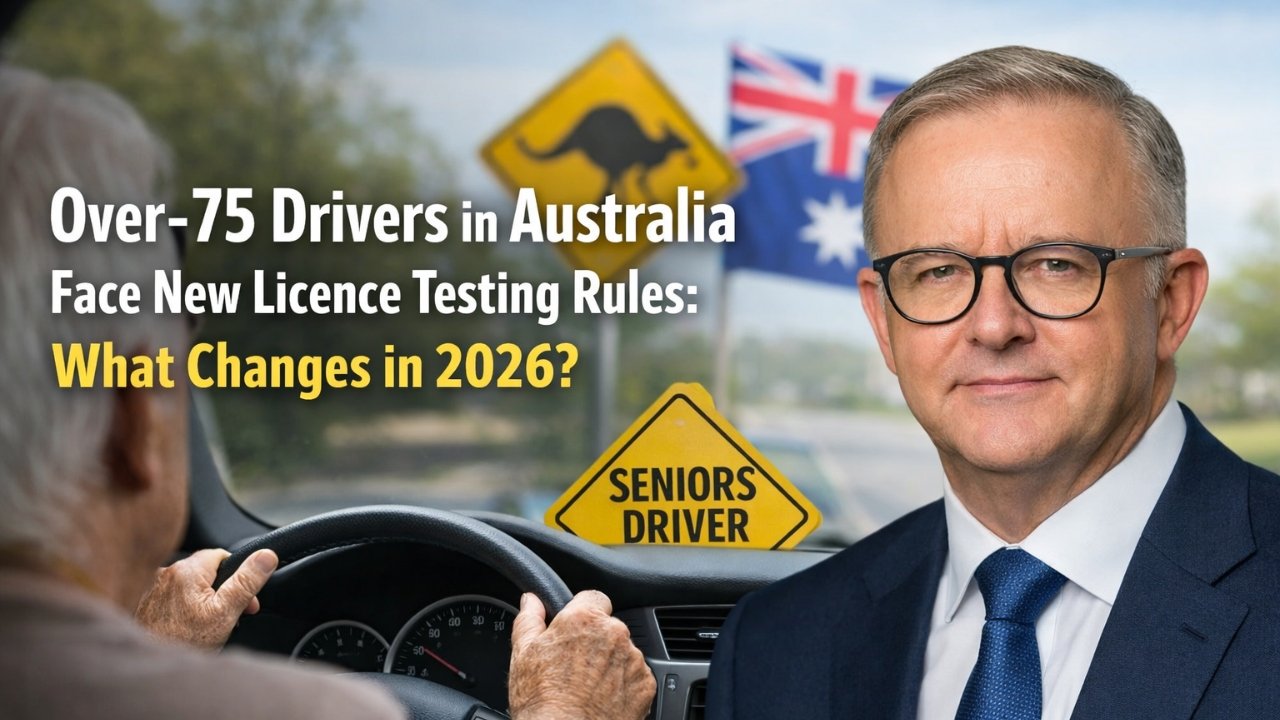
Australia has recently focused on the safety risks associated with elderly drivers. As of 2026, drivers aged 75 years old and over will have their license renewal process lengthened and more steps will be added. All of this has been shown to keep the elderly drivers more independent. After years of observing policies and speaking with safety experts, the focus of this paper are the policies, their reasoning, and the best approach to the affected drivers. Expect regular testing and stricter screening and safety checks on vehicles. This is meant to keep the most responsible elderly drivers on the roads while getting rid of dangerous drivers.
Why Tougher Rules
Legislation leading to incremental increases in the age at which drivers must be assessed has been driven by the over-representation of fatal crashes involving elderly drivers. As of 2025, the Australian Transport Safety Bureau report found that elderly drivers aged 75 years and above made up 15% of fatal crashes but comprised only 8% of the population. The over 85 age group is at the highest risk of crashes and authorities have been implementing ‘greater good’ policies which have been argued to be discriminatory by those restricted by age policies and ‘greater good’ legislation, and the US equivalent of Australia’s NRMA and AARP has lobbied for the elimination of these policies. 2026 will see the first legislation mandating more frequent testing for drivers aged over 85, aligning with the National Road Safety Strategy.
Overview of Changes Starting 2026
Beginning July 1, 2026, all drivers aged 75-79 will be required to renew their licenses every 2 years, instead of the 3 year cycle in place for most regions, while those 80 and over will have to renew their licenses every year. The core changes will include:
Health and Cognition Evaluations: 30 minute evaluation by GP or other designated assessor for dementia, vision (6/12 acuity required), seizure conditions, memory, etc
Driving Evaluation: 45 minute evaluation in a variety of conditions (highways, city vs. rural, etc.) etc. Must include assessments for merging, pedestrians, and multiple hazard awareness. Required for first time drivers over 75 and if health evaluations indicate further evaluations.)
Vehicle Evaluation: Review of adaptative aids (such as hand controls) to ensure vehicle fit is done and may be at a cost. (May be free or low cost)
There are exemptions for rural drivers with a good driving history, but a myGov linked app is expected for digital driver monitoring on driver renewals. First time violation is a $500 fine but will increase for additional violations. These changes are based on feedback from the pilot program in Queensland, which has seen a 12% reduction in senior driver crashes since 2024.
| Renewal Requirement | Age 75-79 | Age 80+ | Estimated Cost (AUD) |
|---|---|---|---|
| Frequency | Biennial | Annual | N/A |
| Cognitive Screening | Required | Required | $100-200 |
| On-Road Test | If flagged | Mandatory | $80-150 |
| Vision/Health Check | Required | Required | Included in GP visit |
| Vehicle Inspection | Optional | Required if adaptive | $50-100 |
Impact of Rules in Everyday Life
New rules mean more tests. But for average over-75 drivers like retirees shuttling to markets or visiting grandkids, tests add hassle but are not delays. Many drivers pass simulation tests. Monash University’s 2025 study found 85% of healthy 75+ drivers acing simulation tests. Test prep includes free online modules located at state transport sites, hazard videos, and mock tests. To preserve independence, adaptive technology like automatic transmissions and larger mirror assists are encouraged. Critics are concerned about remote area access, and mobile testing vans are used in places like the outback of Tasmania. System-wide, clean records for five years reduce tests by 50% and families help by noting early declines via Red Cross at home checklist. Safe driving habits the system rewards.
What to Expect and Failures
Book GP visits 6 months in advance and start early. Apps like DriveSafe Australia’s hazard trainer are useful for practice. If you did not pass the cognitive screen, you must appeal and this will go to a medical review that includes opinions from multiple reviewers. If you fail the road test, you will need to pass the test before being eligible to take the re-test, and community grants often cover the required coaching. Best case scenario you have a restricted license and can only drive short distances at home. There are many positive outcomes from this process. One such case is 82-year-old Sydney pensioner who made some minor adjustments to her vision and was able to renew her license. This is NOT AGEISM, it is empowering. Roadwise is a helpline and it is completely free. By 2027 the plan is to have AI incorporated into assessments. AI will be able to gain insights from eye-tracking to predict the likelihood of road users causing harm.
The new rules in 2026 show how smart and fair Australia’s rules about senior driving are. You can find the adjustments from evidence and real-world suggestions.
FAQs
Q: Will I need to do my full learner’s test again?
A: No, only the refresher health, vision and practical driving tests.
Q: Are there concessions for rural drivers?
A: Yes, mobile services and record-based exemptions reduce the number of tests required.
Q: What about people who have never received a driving infraction?
A: Clean driving records can result in the reduction of testing windows by 50% after the first compliance test.