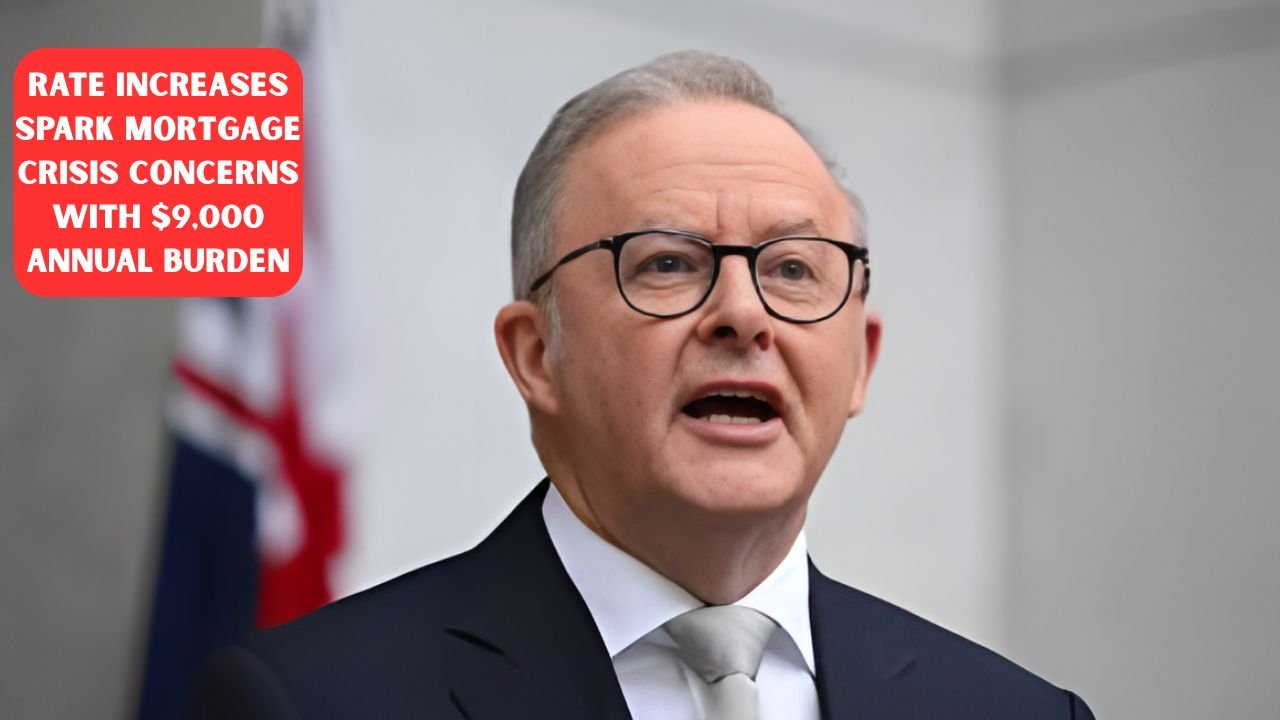
As the ultra-low interest rate period comes to an end, the global housing market is undergoing dramatic changes. US, UK and Australian homeowners have had to make significant adjustments to their household budgets in the middle of an ongoing global pandemic. Homeowners have to pay up to $9,000 more per year, on average, after the fixed-rate pandemic mortgage terms end and the mortgage market is in the middle of a mortgage rate crisis. There is a staggering amount of disposable income that has been reallocated from consumer spending, education and savings to the mortgage market. With central banks hiking rates in an effort to stave off inflation, consumers have to come to terms with the reality of losing housing affordability and their long term financial security.
The Anatomy of the $9,000 Repayment Gap
The \9,000 figure takes into account the new \’rate cliff\’ affecting the Australian and UK mortgage markets. Borrowers in these countries with short-term fixed rates are seeing their interest rates leap from 2% or 3% to almost 6.5%. Suppose a borrower has a mortgage of $600,000. A 3% rise in the interest rate equals a rise in the monthly interest of $750. $9,000 a year in unreduced principal. The phenomenon disproportionately impacts “middle-ring” suburban families. These are families who extended their budget to buy a home during a time of cheap money. Losing $750 a month in budget flexibility is often the difference between financial stability and falling into the trap of using credit cards to finance their lifestyle.
Global Mortgage Rate Comparison and Impact
The data across regions provides context to the severity of the crisis. Most affected are new buyers and adjustable rate mortgage (ARMs) holders in the US as opposed to homeowners with 30-year fixed mortgage rates. Variable rate regions feel the impact instantly, and it affects everyone. Below is a table showing the mortgage market as it was in April 2026.
| Region | Average 30-Year/Fixed Rate | Est. Monthly Increase (vs. 2021) | Annual Household Burden |
| United States | 6.46% | $680 | $8,160 |
| Australia | 6.15% | $750 | $9,000 |
| United Kingdom | 5.85% | £520 | £6,240 |
| Canada | 5.90% | $710 | $8,520 |
Why Rates Remain Elevated in 2026
Overarching high mortgage rates can be traced to central banks attempting to guide high inflation predictions. Although headline numbers from early 2023 show inflation dropping, the last measure to gauge inflation stalling at 2% is proving nearly impossible due to strong labor markets, high cost of services, etc. Furthermore, due to the level of uncertainty from investors concerning the state of the future economy, the 10-year Treasury yield, the most important indicator for calculating mortgage costs, has proven to remain volatile. Different from prior predictions, the Federal Reserve, along with many other economies, had decided to be most conservative with rate cuts, which has shown the economy won’t experience a hard landing. Although this has shown that the economy won’t experience a hard landing, housing in the economy is still non-existent. Many potential sellers remain “locked-in” to their current low rates.
Strategies for Dealing with Current Economic Pressures
Imagine for a moment, the burden of paying $9,000 per year for your mortgage. Financial pressure of this magnitude shifts the mortgage payment options approach from the reactive to the proactive. Financial experts recommend starting this process with a mortgage review. Many lenders have retention discounts to keep customers from defaulting. Savings from moving to a new lender may be less than the frustration of a higher payment when the new lender changes your payment schedule to the beginning of the month. In addition, customers with equity in their homes may be paying for new mortgages at other banks, which creates a delay in the funding of a new loan. In the pursuit of home retention, households are also employing more austere forms of budgeting. The goal for 2026 is to keep your wealth. However, due to the anticipated changes in the economic environment, the goal is to keep your equity. 2026 is the year to wait until 2027, 2028, due to anticipated changes in the economic environment.
Long-Term Predictions of Housing Market
Entering this new decade the housing market is expected to create a new balance as the extreme price appreciation of the early 2020’s begins to stabilize. Even in examples of locations with overvalue prices, we can see a price moderation, which is a sign of a price correction. This is the market’s response to a consumers reduced borrowing power. An ongoing market crisis is to painful to the consumers to whom it is happening, but it is clear it is eliminating the excess speculation. A market can not stabilize until wages normalize with housing costs. This process is already beginning, but we can expect it to take several years. For the time being the $9,000 burden is a reminder of the transitory pains of the market.
FAQs
Q1 What is causing the $9,000 increase in mortgage payments?
The “mortgage cliff” is defined by homeowners align mortgage loans to a fixed percentage considered lower than the market charge. Homeowners who have locked loans at market principles considered lower than 2-3% have jumped to over 6%. This often leads to an immediate increase in revenue to the lending institutions as the downward curve of market interest rates stabilize or increase.
Q2 Can I negotiate my mortgage rate with my bank?
Yes. Many lenders have “retention teams” who are given the power to offer rates to current customers to prevent them from leaving. A quote from a competing bank can be a helpful tool to use in negotiate rate adjustments.
Q3 Will mortgage rates decrease by the end of 2026?
Forecasts impact predictions on mortgage rates. Most economists think it will continue to stay about the same over the course of 2026. Major drops are not expected until inflation gets to about 2% and holds steady there, which likely won’t happen until 2027.